Graphite
Retrieval
System (C-GRS)
A modular vacuum gripping system for graphite reactor dismantling, enabling safe, scalable retrieval with minimal dust and secondary waste generation.
Graphite
Retrieval
System (C-GRS)
A modular vacuum gripping system for graphite reactor dismantling, enabling safe and scalable retrieval of intact, damaged and non-ideal graphite blocks while minimizing radioactive dust and secondary waste.
01
Patented vacuum system
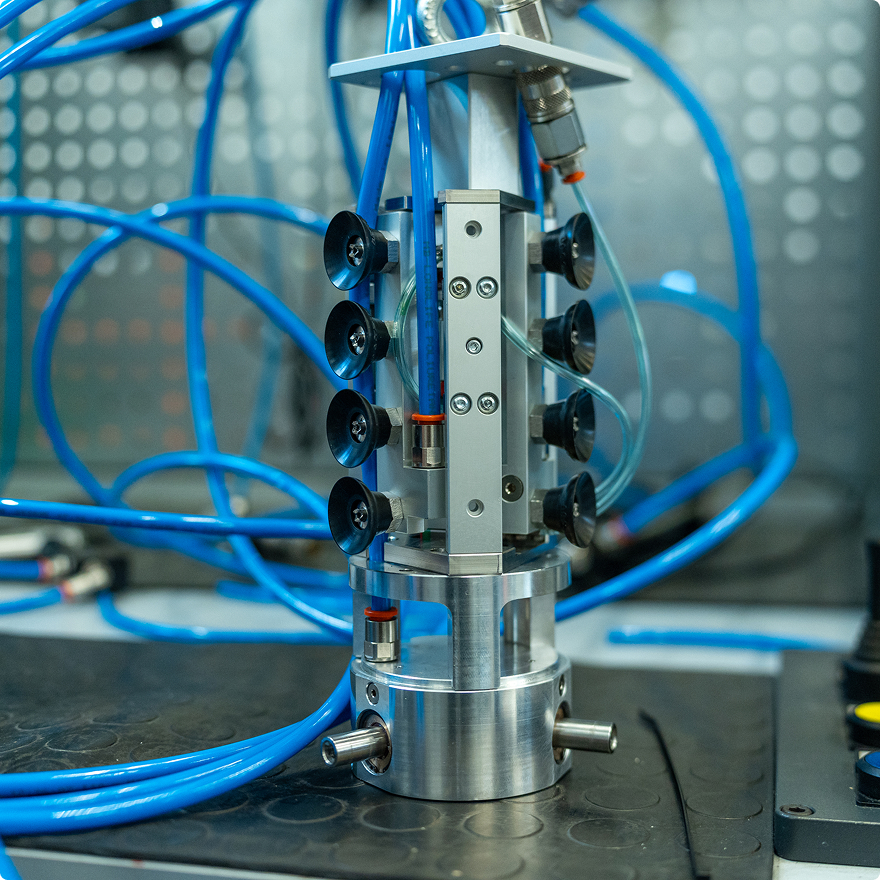
Proprietary suction cups provide a secure grip on irregular, dusty graphite surfaces, delivering up to 17× higher lifting capability than conventional suction cups. The patented vacuum system is designed for controlled retrieval of graphite blocks during reactor dismantling.
02
Passive Safety
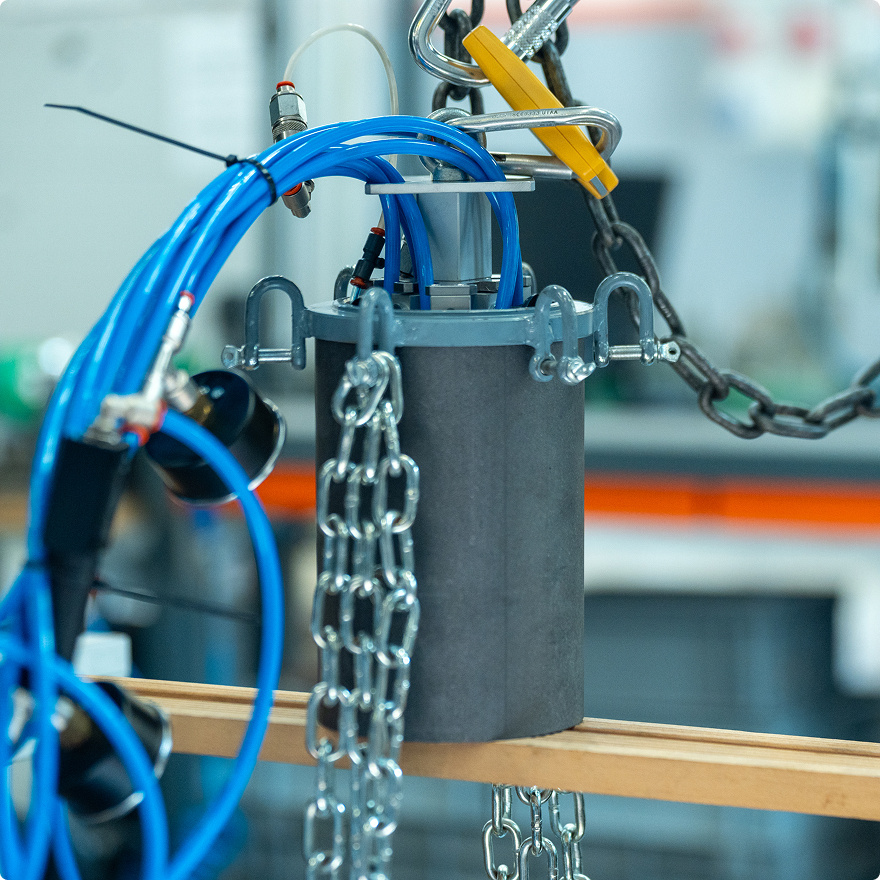
The grip is maintained even in the event of total electrical power loss, preventing accidental block release through an integrated passive retention system.
02
Passive Safety
The grip is maintained even in the event of total electrical power loss, preventing accidental block release through an integrated passive retention system.
03
3D Handling
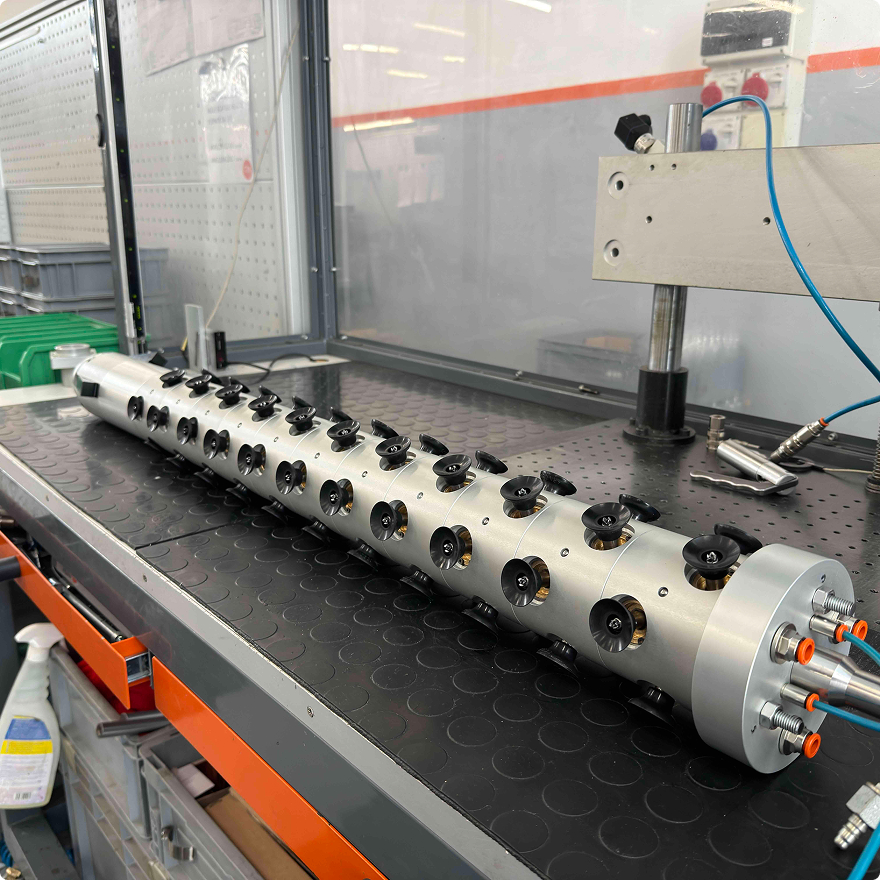
Enables controlled vertical and lateral handling of intact, damaged and non-ideal graphite blocks while integrating with existing robotic platforms. The configurable system supports controlled 3D movement while adapting to different graphite block conditions and retrieval requirements.
In action
Validated for Nuclear Reactor Graphite Retrieval
The C-GRS was validated at the Latina Nuclear Power Plant in collaboration with Sogin, successfully lifting broken, scratched and non-ideal graphite blocks with a safety factor above 6.
Technical Specifications
Graphite Retrieval System for Nuclear Decommissioning
Validated at the Latina Nuclear Power Plant in collaboration with Sogin, lifting broken, scratched and non-ideal graphite blocks with a safety factor above 6.
Demonstrated payload
72.3 kg using 20% of the available contact surface
Safety factor
> 6
Lifting capability
Up to 17× higher than conventional suction cups
Handling capability
Controlled vertical and lateral movement, including damaged blocks
Secondary dust generation
Minimal
Safety system
Passive load retention in the event of power loss
Operating principle
Vacuum gripping with proprietary spiked suction cups
Intellectual property
Patented technology
Target reactor families
Magnox, AGR, UNGG, RBMK, HTGR, MSR
Technology readiness
TRL 7, validated at the Latina Nuclear Power Plant
Applications
Applications Across the Nuclear Lifecycle
From active reactor maintenance to full decommissioning, and from existing graphite-moderated reactors to next-generation designs, the C-GRS supports safe graphite handling across every stage of the nuclear reactor lifecycle.
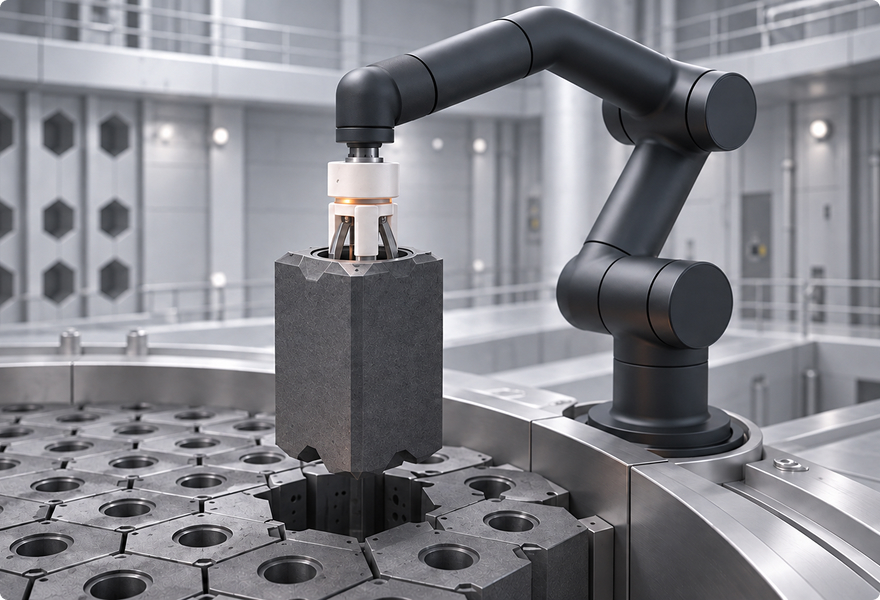
Nuclear Decommissioning
Safe and scalable retrieval of irradiated graphite blocks during nuclear reactor dismantling and decommissioning.
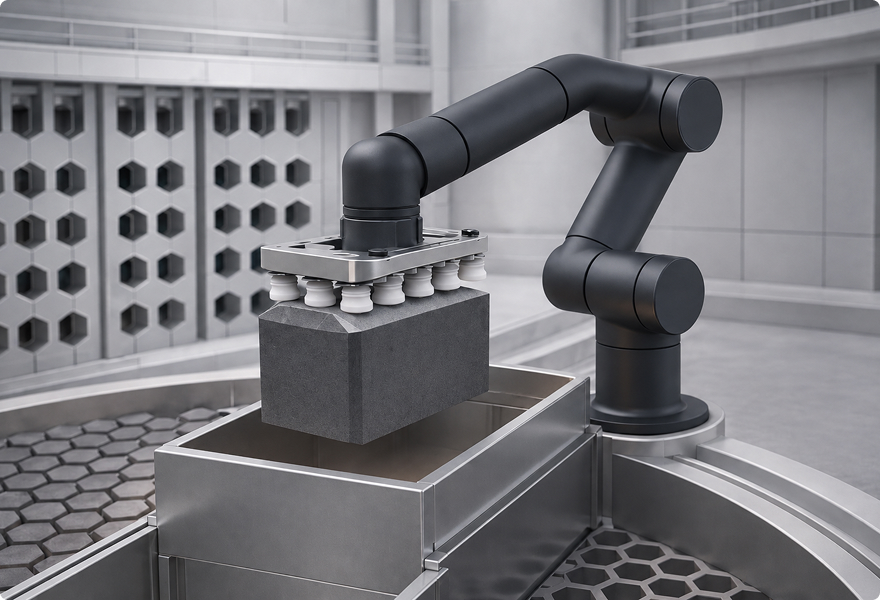
Graphite Reactor Maintenance
Remote handling of graphite components during inspection, repair and reactor core maintenance activities.
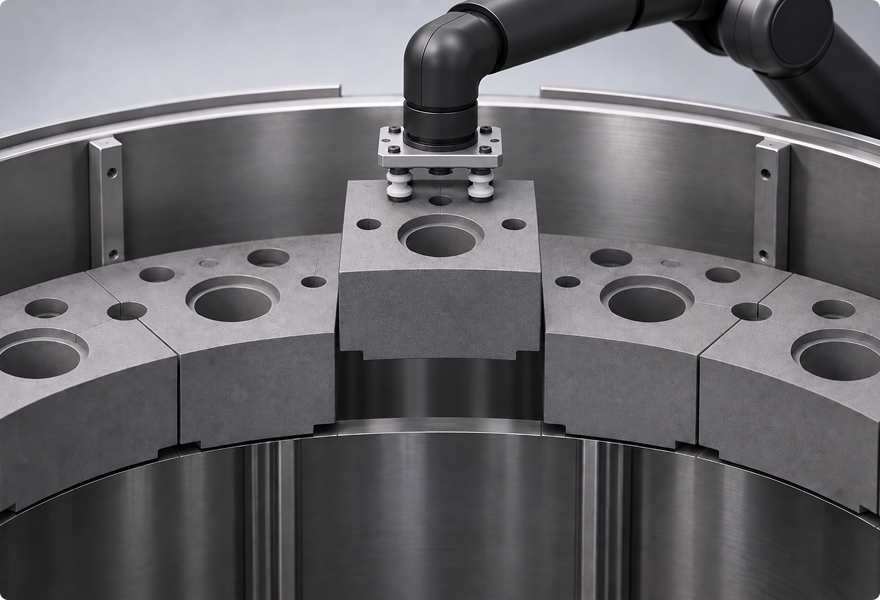
Generation IV Reactor Construction
Precision handling and positioning of graphite components during Generation IV reactor assembly and installation.
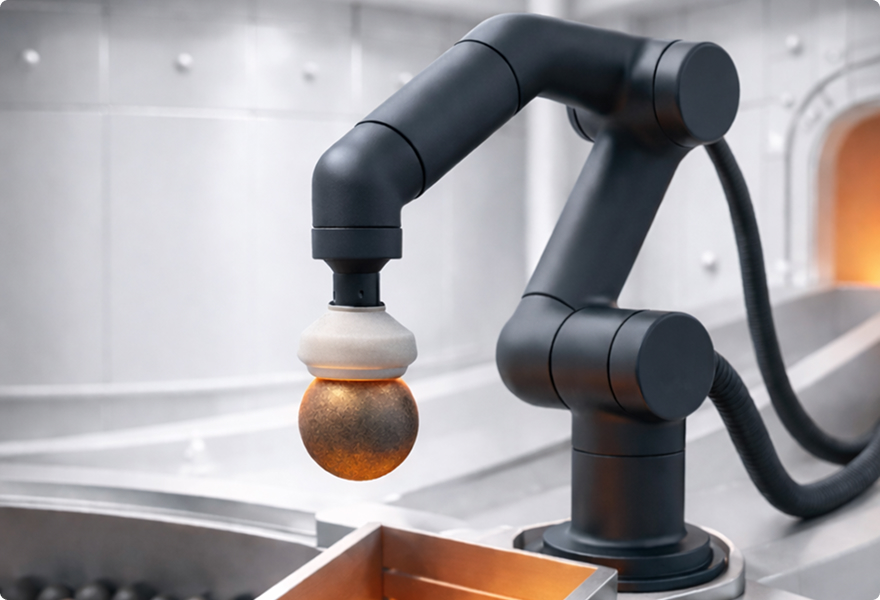
Generation IV Reactor Operations & Decommissioning
Robotic handling solutions for maintenance, component replacement and end-of-life dismantling of Generation IV reactors.